Early days

Updated: Jan 5, 2020
This is the view Yehouda passes to get to work.
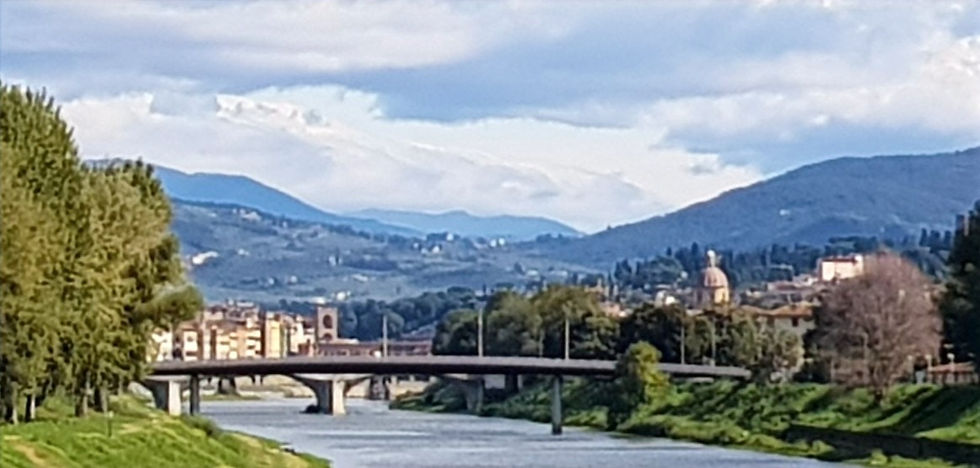
The first stop was to the office.
We walked the one kilometre from our apartment in Isolotto past the local daily-setup mercato, over the pedestrian bridge to Cascine Park - and almost tripped as our first view of "real" Florence just up the Arno River came into focus. The day had just begun. We were walking into the world of the Medicis, though it's too soon for me to be able to tell you which ones - Cosimo the Elder, Cosimo the Younger, Lorenzo the Magnificent, Piero the Gouty... hey, I have a year to figure this out.
The office is in the old stables, as in, 18th-century old. The stables served the summer palace of the Grand Duke and the extended family. They acquired this divine piece of real estate - a true nature reserve - in the 1500s and renovated a couple of centuries later, presumably to provide Yehouda with an office in 2019, even if he was relegated to the stables. What was the palace itself, the larger building next door, today serves as the University of Florence's Department of Agriculture and Forestry. [Cascine is the largest public park in Florence, extending 3.5 km from our end to the historic centre of town.]


At the office we meet Yehouda's colleagues - all three of them. And two are married to each other! I'm confused - this is the University of Florence's Dept of Earth Sciences? Not quite. The department, it emerges, is in town, in a building right behind La Galleria dell'Accademia - home to David [yes, that one]. But Florence is all about heritage [naturally] and while the university has grown over the years in population, it is impossible - illegal too - to make even the slightest change to the historic buildings and there is simply no room there for everyone. So departments, classrooms, staff and students are scattered around the city - a description that we will soon hear echoed all over Italy.
There's more to confuse me: Yehouda's colleagues here in Cascine are not geologists [like him] but rather soil scientists. I nod as if I can tell the difference. What I do understand is that this is a remarkable set up - there is Stefano, a professor and a former head of the department; Guia, who directs the laboratory [the hardcore lab part of which is in an ancient kitchen - can't be renovated or updated!] and more importantly Stefano's wife and it seems to me chief-navigator-of-life-in-Florence; and Anna, analyst and postdoctoral scholar.
Our grand tour of the premises includes the old palace, next door. The whole structure is rundown, cold and in some places fragile, but it is buttressed by enthusiastic students and its long-past elegance can still be felt in numerous corners and cornices, inside and in the surrounding Versailles-inspired gardens and parkland. Part of the charm here is that you can feel that an immeasurable number of muddy boots have trodden these floors for eons.
Guia disappears briefly and returns with a key and we follow her upstairs, into the Renaissance. Stair by stair, detail by detail, we leave the memory-of-glory on the ground floor to better-preserved glory above. The senses are shaken momentarily as we walk through a long library with frescoed ceilings and the musty smell of ancient books and into a storied hall, once a reception chamber of the Grand Duke's, today used for graduation ceremonies. This time it is Stefano who disappears, soon to slow-pace back to us in the long black robes of academia as we know it, bringing alive the pomp and ceremony this room is used to, yet teasing us at the same time.


It is not as if we don't know what it is to live amidst historic wonders - we come from Israel! And I have lived in history-steeped Paris, Tokyo and Kyoto. But the thread of time from-then-to-now feels here more distinct, long connective temporal spaghetti. Perhaps it is age-related [mine and Florence's] - I will think about that later.
Onward to town. We might have missed the Cascine tram stop - a tiny platform in the verdant park - except that it started singing! Some lovely ethereal chanting floated around and following it, I found this sign on the ground:
Benjamin – sounds along the tram lines

Benjamin is a sound art festival at the tramway stops. Soundscapes and experimental sounds will take over the tramway speakers, between one service announcement and another, [for] 4 days. More than 40 sound artists at 12 stops to transform the waiting time into an imaginary journey!
Is it possible, through sound, to make public transportation a pleasant and unexpected experience to share with others? Could it be possible to transform the waiting time into an imaginary journey?
Is it possible to break into the commuters’ isolation? how can we invite people to get out of the bubble of their own personal devices so to find themselves as part of a moving - even if temporary - community?
The goal is to bring the travelers, the commuters, to a surprising elsewhere, to let them experience even just for brief moments other places: new, far away, real or imaginary...sonic travels to other panoramas than those they can see at the tramway stops.
Am I in the right place in the world at the right moment, or what!?!
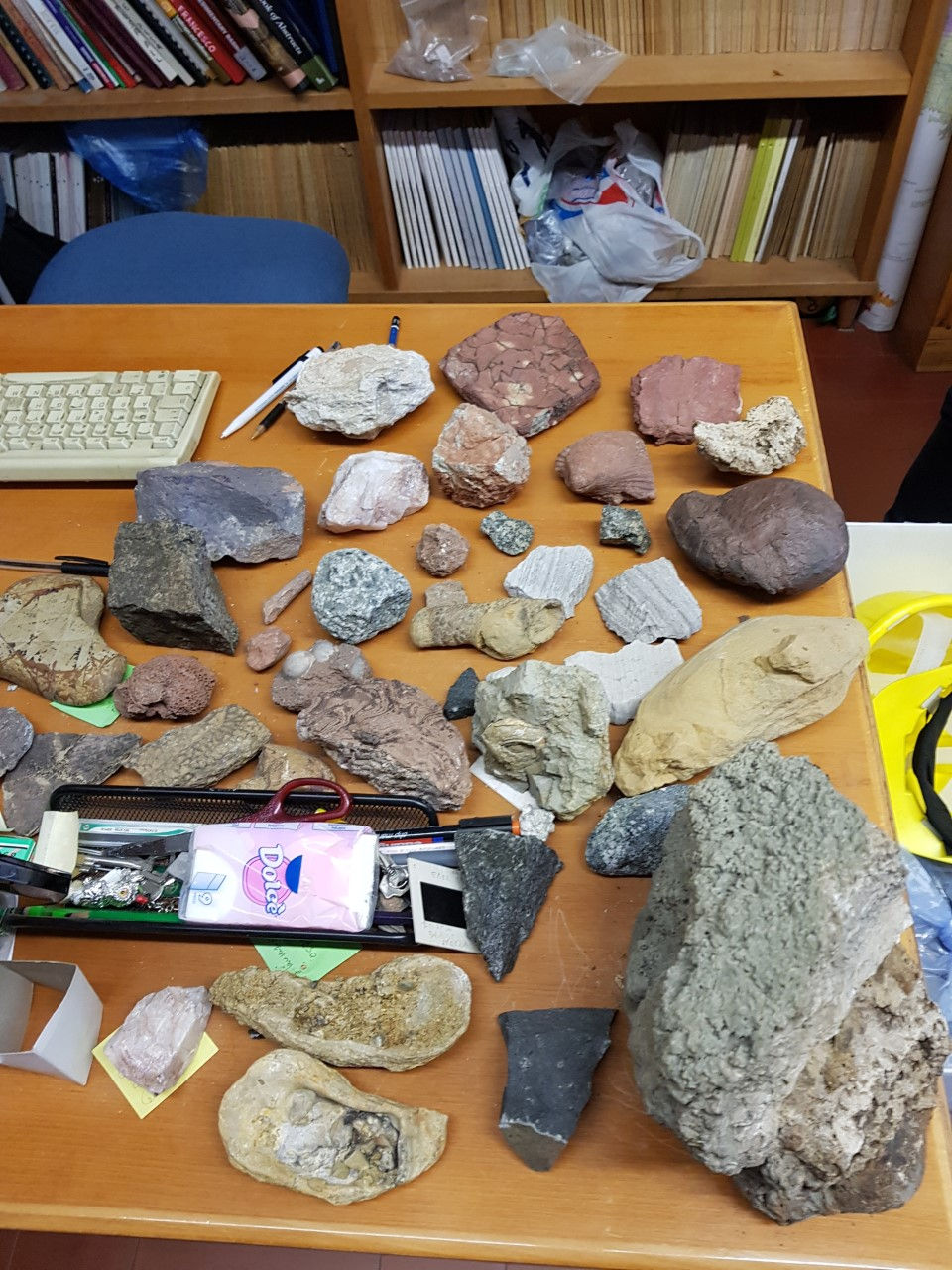
At the esteemed Earth Sciences Department, il Dipartimento di Scienza de la Terra, the introductions are warm and chipper, but as I have learned is the way with geologists, the conversation quickly turns to stratigraphy and fluvial what-have-yous. I saw it coming too: The first office we walked into was Marco's. The space on his desk is shared equally by a computer and inspiration in the form of a collection of rocks from his professional life in a host of countries; the collection [unsurprisingly] spills over into a box next to the desk and there are more on the shelves, in discourse with the books. But there is a twist to the talk this time - there are whole sentences I understand! They include words such as grapes, wine, weather, between here and Siena, best Tuscan food... But soon I realise that, even if it is more than I am used to, I'm still only getting half the conversation. When they talk grapes and wine, they mean soil conditions and terroir and all the stages before I will get to hold a glass of red in my hand. When they talk weather, they are talking about "events" that have occurred over the last 10 million years.
“I can see that it is going to be very good when we go into the field," Marco says to Yehouda. "Lots of hard work, and lots of very good wine.” The collaboration begins with the hour, in one type of research field - a ristorante. At least we get a culinary lesson too: ribollita = a hearty Tuscan potage made with white beans, bread and vegetables.

In the days that followed we began to explore the city. I can already tell you lots of stories about earth, stones, rocks and marble - geology and art - nature and sculpture - food and, well, food. When you scratch the surface, you have to be ready for some surprises. Stefano walked us through some of the intricacies of Florence, geographically and bureaucratically. It turns out Italy meets the expectations: it is exacting and messy, organised and so very not, punctilious... until chaos fits better. Leaving the university, meandering along on cobbled roads from the Middle Ages, imagining a time when horses were the fastest means of local transport, Stefano says, "You know, even the stones on the street are not all old and not all pure. Some have synthetic additions." Mamma mia!


This is wonderful Lisa
Now I really want to come visit!! Thank you for sharing!!
Enjoy !